Where does it pay off?
Not everywhere. The talk shows how to find the recurring tasks where AI can save hours every week, and the ones that are not worth a project.
A management team does not need another tour of features. It needs to know where AI can save real hours in its own operations, what can go wrong, who should own it, and what to decide in the coming quarter. That is what this talk covers, with live examples from systems that run every day.
Not everywhere. The talk shows how to find the recurring tasks where AI can save hours every week, and the ones that are not worth a project.
A wrong answer sent to a client, data in the wrong tool, a system nobody maintains. Each risk comes with the rule meant to prevent it.
AI initiatives often stall because of people, habits and missing ownership, not because of the tool. The talk names the causes and what helps a change stick.
Built from two talks, in the mix that fits the team: From tools to systems and Why AI projects stall. The outline is agreed with you in advance.
Say a management team of 8 at a services company gives the talk one hour of its quarterly meeting. The talk shows three systems running. Afterwards the team lists five of its own recurring tasks, picks one to start from and names its owner.
With senior management the talk stays at the level of decisions and does not go into the tools. One hour of the management meeting is enough for it.
Operations, service, sales, finance and HR. The examples are chosen from the recurring tasks of those departments, so each manager sees their own team's week in them.
In a large room of managers from different departments the talk leans more on the people side, and the examples come from several departments. For a conference stage, see the keynote page.
A talk gives the management team the picture. In a hands-on AI workshop of about 3 hours, the team works on its own tasks, chosen in advance, in the tools the organization already uses. The workshop can follow the talk or stand alone.
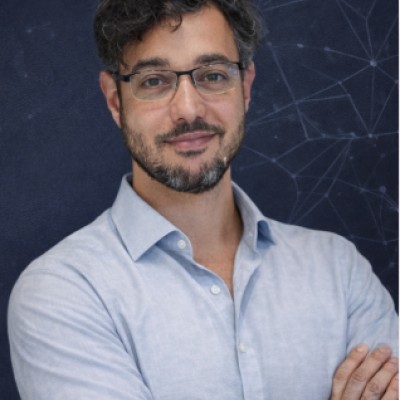
Or Emergy, founder of Emergy AI Ops. I build AI systems inside businesses and train the teams that work with them, so every example on stage comes from real work, with client details removed.
My background is in technology consulting and in behavioral change. The second is why the talks deal with people as much as with tools: habits, concerns and the rules that make a team keep using what it learned.
A talk, with time for discussion. A team that wants to practice adds a hands-on workshop. A team that wants decisions on its own processes continues to a short AI audit.
Yes, wherever the setting allows: agents at work and real drafts, with client details removed.
Yes. The examples are chosen for the team: a law firm sees document work, an operations team sees reporting, a sales team sees follow-ups.
45 to 60 minutes, in person in Israel or online, in Hebrew or English.
A one-page summary with the first steps, to share with the team.
Yes. A hands-on workshop of about 3 hours for a management team, built around tasks the team chooses in advance. It can follow the talk or stand alone. A team that wants decisions on its own processes continues to a short AI audit.
A workshop here is about 3 hours, not a full day. In it the team chooses its first process and practices on it, and each manager leaves with a real task from their own week done with AI and a short written guide. Building a working automated workflow inside the company's systems is different work: that is implementation, one process at a time.
The talk deals with exactly that: why teams drop a tool after the first try, and what keeps a change going, which is an owner, written rules and follow-up. The workshop is built the same way: on the team's own tasks, with a short written guide. How training continues after a workshop is on the team training page.
No. The talk deals with decisions, rules and ownership, and those hold for every tool. The workshop runs in the tools the organization already uses or is about to adopt, such as Claude, ChatGPT, Gemini or Microsoft Copilot.
The talk fits a management team of a few people and a managers' conference alike. The workshop is for a small group, so that everyone practices. Both run in person in Israel, including at the organization's offices, or online.
Send the date, the number of people and the occasion on WhatsApp, or book a 20-minute call. The full process is on the lectures page.
There are no prices on this site. After the first conversation you get a scoped proposal in writing. On WhatsApp, the message opens with a few short questions, so the first reply can already be useful.
Organizations I have worked with